
Understanding Complex Human Systems
Most people study events.
Few study the structures that produce them.
Governments rise and fall. Businesses succeed and collapse. Ideas spread across civilizations. Narratives survive for centuries while others disappear within a generation. Yet behind every visible outcome lies an invisible architecture that shapes what becomes possible and what does not.
My work is dedicated to understanding those architectures.
For more than a decade, I have explored the mechanisms that govern human systems across multiple disciplines, including history, political theory, organizational design, information systems, strategy, computational humanities, and institutional analysis.
Although these fields are often studied separately, they share a common foundation. Every organization, society, institution, and culture depends upon systems that collect information, distribute authority, shape incentives, and generate meaning.
The central question guiding my research is simple:
How do human systems work?
Rather than focusing exclusively on outcomes, I seek to understand the underlying structures that produce them.
This perspective has led to the development of original analytical frameworks, historical models, and interdisciplinary methods designed to examine how ideas evolve, how institutions survive, how organizations fail, and how power operates across time.
The books presented on this website represent milestones within that broader intellectual project. Together, they form an ongoing effort to understand the architecture of meaning, information, institutions, governance, and human organization.
Distinctive Insights and Strategic Frameworks
Empowering decision-makers with innovative strategies. Bridging disciplines for actionable insights.
- Information Architecture and Information Engineering
- Computational Humanities
- Political Theory and Constitutional Design
- Organizational Architecture
- Strategic Analysis
- Historical Systems
- Institutional Development
- Governance and Public Administration
- Conceptual History
- Semantic Evolution
- Systems Thinking
While these disciplines may appear distinct, they are united by a common objective:
To understand how complex human systems emerge, adapt, succeed, decline, and transform.
- Information flows
- Institutional incentives
- Organizational design
- Conceptual frameworks
- Historical narratives
- Cultural transmission
- Decision-making systems
By studying these foundations, it becomes possible to identify patterns that remain hidden when attention is focused solely on events.
Whether analyzing a government, a business, a social movement, or a historical transformation, the objective remains the same:
To make invisible structures visible.
- Semantic drift
- Conceptual containment
- Narrative stabilization
- Linguistic adaptation
- Historical reinterpretation
Its objective is to understand how political, cultural, and social language evolves across generations.
- Institutional design
- Structural resilience
- Governance architecture
- Boundary conditions
- Incentive systems
- Long-term sustainability
Its purpose is not merely to identify what is wrong, but to explore what can be built after the deconstruction.
- Organizational effectiveness
- Structural vulnerabilities
- Information bottlenecks
- Incentive conflicts
- Strategic coherence
- Decision-making quality
- Long-term systemic risk
The objective is to identify hidden weaknesses before they generate visible failure.
— The constitution is the only solid basis of our liberties. A people who mean to be their own governors must arm themselves with the power which knowledge gives.
Biography
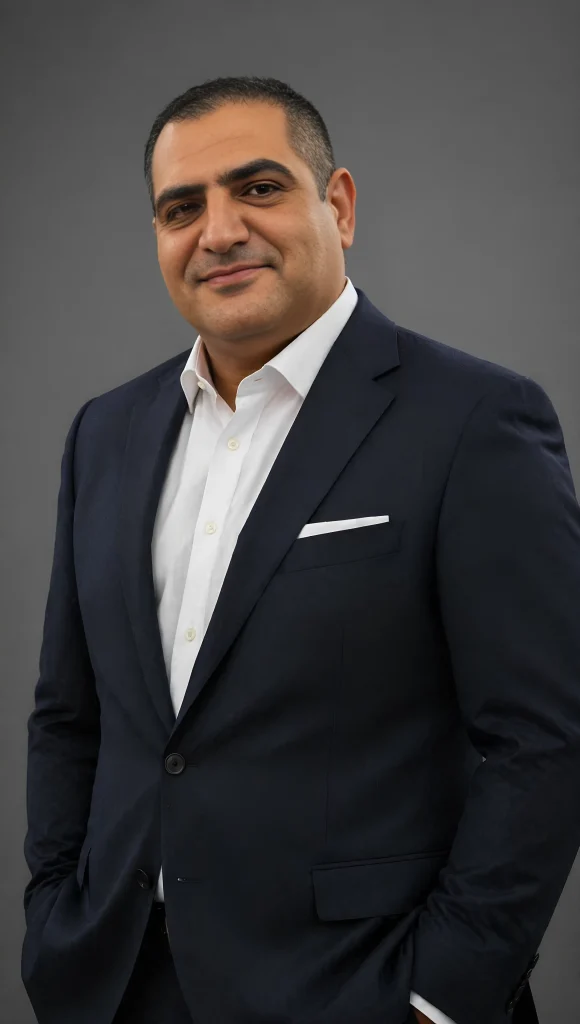
Siamak Fereidooni is an author, strategist, and independent researcher whose work spans computational humanities, political theory, organizational architecture, information systems, and historical analysis.
His research focuses on the evolution of concepts, institutions, narratives, and governance systems across time. He is the creator of Histometrics, a methodological framework for studying conceptual transformation and semantic change.
Through books, analytical models, and interdisciplinary research, he investigates the mechanisms through which human systems emerge, evolve, succeed, and fail.
His current work continues to explore the intersection of information, meaning, institutions, and collective decision-making.